




What is a Render Base Coat?
A render base coat, sometimes referred to as a scratch coat, is an underlying layer that’s used as part of some render systems. It can be used to help prepare the substrate for the application of finishing render, creating a suitable surface for a professional finish.
The preparation, application and suitability of a base coat will vary between products, however, they can offer several benefits such as:
- Creates a Suitable Base: Helps to create a suitable, even surface that’s ready for the subsequent render application.
- Improves Adhesion: A suitable base coat can help provide adhesion between the substrate and render finish.
- Supports Reinforcement: Some base coats are used to strengthen the render system and help reduce the risk of cracking.
- Wide Variety: We supply a wide variety for different substrates and project requirements.
At P1 Plastering Superstore, we offer a range of rendering base coat options from trusted brands like PRB Systems. For help completing your rendering project, browse our range of plastering tools and machines.
When Do You Need a Render Base Coat?
A render base coat is typically required to help prepare a surface before the finishing render is applied. It can also be important when using reinforcement mesh, as some base coats are designed to hold the mesh in place and therefore help reinforce the finished system.
The type of base coat render you will need will depend on the substrate and the application. Below are some common applications to help you find the right fit for your project.
| Base Coat Render | Overview | Best Suited To |
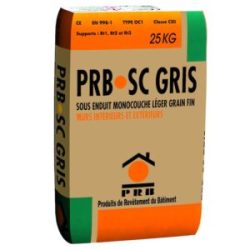
| PRB SC GRIS | A semi-lightweight, fine-grained basecoat render. | Unpainted brick and blockwork areas. |
| PRB Classic Tal | A semi-dense, fine-grain base render. | Unpainted brick and blockwork areas. Do not use on lightweight masonry – in these instances, use SC GRIS. |
| PRB Renomur Top | A specialist renovation base coat render. | Existing painted render. |
| PRB Fondisol | A thin base coat render and bonding mortar. | External wall insulation (EWI) & render board systems as an adhesive and as a base coat for systems like Thermolook and onto mineral wall insulation, as well as EPS. |
| PRB Fonimur | A thin coat fibred base coat. | An adhesive and base coat in one bag for EPS insulation when using a thin coat system. |
Always check the manufacturer’s guidelines to confirm that the product is suitable for your substrate and intended render system.
Shop Thin Coat Render from P1 Plastering
At P1 Plastering Superstore, we supply a wide range of render base coats for different substrates, render systems and project requirements. Our range includes products from trusted manufacturers such as PRB Systems, giving you access to established products for rendering, renovation and EWI applications.
When you shop with P1, you can benefit from:
- Wide product choice
- Trusted brands
- Expert advice
- Fast delivery
Alongside rendering base coats, you can source reinforcing mesh, render, tools, machinery and other products needed to complete your project.
Frequently Asked Questions
Find answers to all your render base coat queries. Got a question we’ve not covered? Give our team a call today.
-
How thick should a render base coat be?
The required thickness of a base coat depends on the material you’re using and the substrate the base coat is being applied to. It’s best to check the manufacturer’s guidelines for your chosen render base coat.
-
Can I apply a render base coat directly to brickwork or blockwork?
Yes, some render base coats can be applied directly to suitable brickwork or blockwork, provided that the substrate is properly prepared and the product is designed for that application.
-
How long do you need to wait before applying the following coats?
Refer to the manufacturer’s guidelines/data sheets for the recommended drying or curing times before applying subsequent coats. Drying times can vary depending on the render system, weather conditions and substrate. Applying coats too soon can affect the performance and adhesion of the system, so it’s important to allow sufficient time between applications.
-
Do I need a primer before applying a base coat on existing surfaces?
A primer may be required when applying a base coat, but this depends on the surface and render system being used.