




Forced Action Mixers and Paddle Mixers Overview
Forced action and paddle mixers are ideal for preparing a more thorough mix for the more coarse aggregates – making them a perfect choice for bedding mortars.
Like all our machines available for hire or purchase at our Cheltenham-based plastering superstore, our paddle mixer and forced action mixer range include models from top brands such as Baron – known for their durable, efficient and safe machinery.
At P1, we offer a full range of machines and spare machine parts to help you tackle your project head-on. If you need any assistance, please don’t hesitate to get in touch. From product recommendations to machine training, we offer a variety of expertise to help assist you and level up your skills.
What is a Forced Action Mixer?
Forced action mixers are a type of rendering machine designed for mixing thick and dense materials such as concrete, mortar and screeds. It uses rotating blades, referred to as paddles, to continuously push and pull materials through the drum mixer. This action forces the ingredients to mix thoroughly, promising a consistent blend.
What is a Paddle Mixer?
Similarly, paddle mixers are a type of plastering machine which uses blades to stir materials within a drum. It’s ideal for lighter mixtures and smaller batches, giving you a good mix for materials like plaster, paint or thinner mortars.
What’s the Difference Between a Forced Mixer and a Paddle Mixer?
The key difference is their construction and their intended use. Forced action mixers are built for tough jobs and handle dense, coarse materials with rotating blades that ensure a thorough mix. On the other hand, paddle mixers are better for lighter, less dense materials, and stirring paddles are used to mix more gently.
Types of Forced Action Mixers
At P1 Plastering Superstore, we team up with industry giants to bring you high quality products that give you the best value for money. We stock forced action mixers from the renowned brand, Baron, promising quality and performance for every project you take on.
Baron Forced Action Mixers
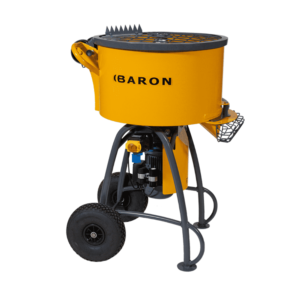
Baron’s mixers are tough, reliable and built to last. These mixing machines are engineered to tackle the rough stuff with ease, including resin, concrete and mortar. Baron takes pride in combining economy with ergonomics, so you get mixers that not only perform exceptionally well but are also designed to be easy on the user. Whether you’re mixing up a large batch or handling tough materials, Baron’s mixers deliver the durability and efficiency you need.
Benefits of Forced Action Mixers
Forced action mixers are a solid investment for any plastering professional looking for reliability and efficiency in their work. These machines offer several key advantages that make them an essential tool on the job site:
- Thorough Mixing
Plastering mixing machines are powerful tools that deliver a thorough blend by stirring materials through the drum. This ensures that every batch is consistent to deliver high quality results.
- Durability
Built to withstand heavy-duty use, these mixers can handle thick materials without breaking down – the type of reliability you need when on site.
- Versatility
Whether you’re working with concrete, screed or mortar, forced action mixers can handle a variety of materials. Their robust design means they’re up to the task, no matter what mix you’re working with.
- Efficiency
With a forced action mixer, you can tackle large batches quickly. This machine is designed to speed up the process, saving you time and effort on the job.
- Ease of Use
Despite their heavy-duty capabilities, many forced action mixers, especially those from Baron, have user-friendly features that are easy to operate and maintain.
How to Clean Paddle Mixers
Keeping your paddle mixer in shape is important for good performance and extending its lifespan. Here’s a brief guide on steps you can take to clean your paddle mixer post-project.
- Unplug Your Mixer
Before you begin cleaning, please ensure your mixer is turned off and unplugged. Safety first – always disconnect the power source to avoid any accidents.
- Remove Residual Material
After use, remove any leftover material from the drum and paddles. You can use a scraper or spatula to get rid of large chunks. Be thorough, as residual material can harden and make the next project difficult.
- Clean the Drum
Fill the drum with water and let it soak to loosen any remaining material. Use a brush or sponge to scrub the inside.
- Clean the Paddles
Remove the paddles from the mixer if possible to clean them separately. Use a brush or a sponge to scrub, paying special attention to areas where material might get trapped.
- Rinse Thoroughly
Once you’ve scrubbed the drum and paddles, rinse them with clean water to remove any soap or residue. Make sure all cleaning agents are fully rinsed off to avoid contamination in future mixes.
- Dry the Mixer
Allow the drum and paddles to dry completely before reassembling the mixer. You can air dry them or use a clean, dry cloth to speed up the process. Ensuring everything is dry helps prevent rust and prolongs the life of the mixer.
Frequently Asked Questions
Find answers to all your forced action mixer and paddle mixer queries. Got a question we’ve not covered? Give our team a call today.
-
What type of materials can I mix with a forced action mixer
These machines are built for dense, heavy materials like mortar, screeds, plaster and other coarse aggregates. It’ll get the job done right and give you a consistent mix every time, however, if you’re uncertain, please get in touch with our team for more advice.
-
What safety precautions should I take when using a mixer?
First, always read the manufacturer’s instructions and follow them closely. Make sure you’re wearing the right protective gear - gloves, goggles and ear protection are a must. Also ensure the mixer is on a stable, flat surface during operation.
-
What is the mixing capacity of a forced action and paddle mixer?
Mixing capacity varies depending on the model. Generally, Baron mixers can handle up to 167 litres, but we recommend checking the specifications for each model to match.
-
Can I mix mortar with a paddle mixer?
Absolutely. A paddle mixer is a great choice for mixing mortar, ensuring you have the right product that can handle the volume and consistency of the materials you’re working with.
-
How do you stop mortar from sticking in the mixer?
Mortar sticking can be a pain, but there are always ways to manage it. First, make sure you’re cleaning the mixer thoroughly after each use - any leftover can create build-up. For stubborn cases, a quick scrub with a wire brush can help loosen any stuck mortar. We also recommend maintaining a proper mix consistency - neither too wet nor too dry - to keep your materials from sticking in the first place.